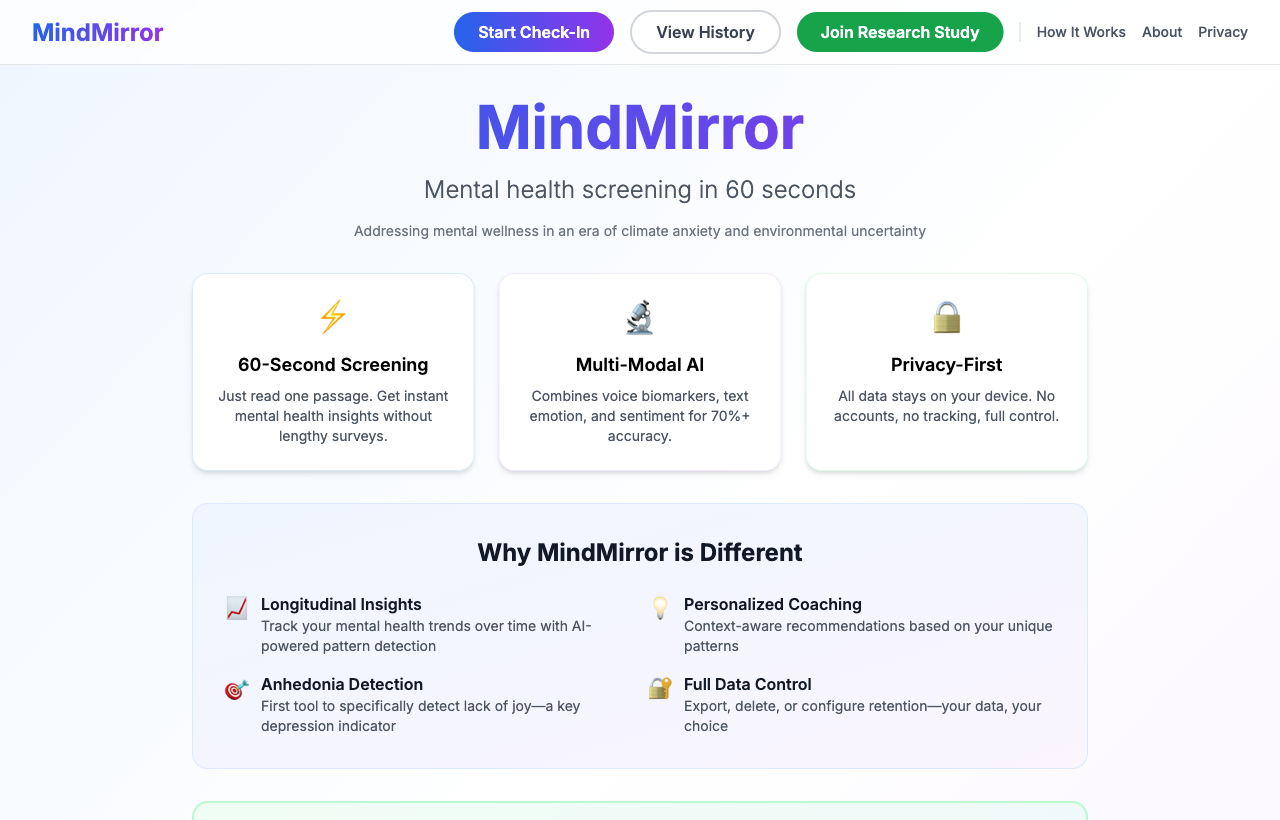
We are excited to share our entry into the Blue Ocean Student Entrepreneur Competition: MindMirror, a mental health screening tool built by EcoQuest students. The competition asks students to find an uncontested market space rather than compete in a crowded one. The gap we went after sits between clinical depression screening, which is expensive and often means a weeks-long wait, and consumer wellness apps, which are easy to reach but carry no clinical validation at all. What got us there was environmental: research on climate anxiety in young people is what made us take youth mental health seriously as a problem worth building for.
Here is what MindMirror actually does. You record about sixty seconds of unscripted speech. The app extracts acoustic features from that recording, runs them through a model, and returns an indication of depression risk along with links to real support resources. It is a screening tool, not a diagnosis — the distinction matters, and we say so inside the app. The research question behind it is whether voice features can predict scores on the PHQ-2, a short and widely used clinical depression screener. That study is pre-registered on the Open Science Framework at doi.org/10.17605/OSF.IO/CP8QA, which means the hypothesis and analysis plan were published before we looked at any results.
MindMirror is built with Next.js on Vercel, with the machine learning service running separately. We have collected data from roughly 230 participants recruited through Prolific, a platform for paid research participants — real people compensated for their time, not simulated traffic. Analysis of that data is ongoing, and we are not publishing accuracy figures until it is finished. In May 2026 MindMirror was named a Top 500 Finalist in the 2026 Blue Ocean Student Entrepreneur Competition, out of more than 23,000 students from 173 countries; the result is listed publicly on the competition website. One thing we have designed but not built: a climate anxiety module using the CAS-5 scale. The specification is written. Validating it properly would take far more participants than a pilot has, so it remains a design document rather than a feature, and we would rather say that than imply otherwise.